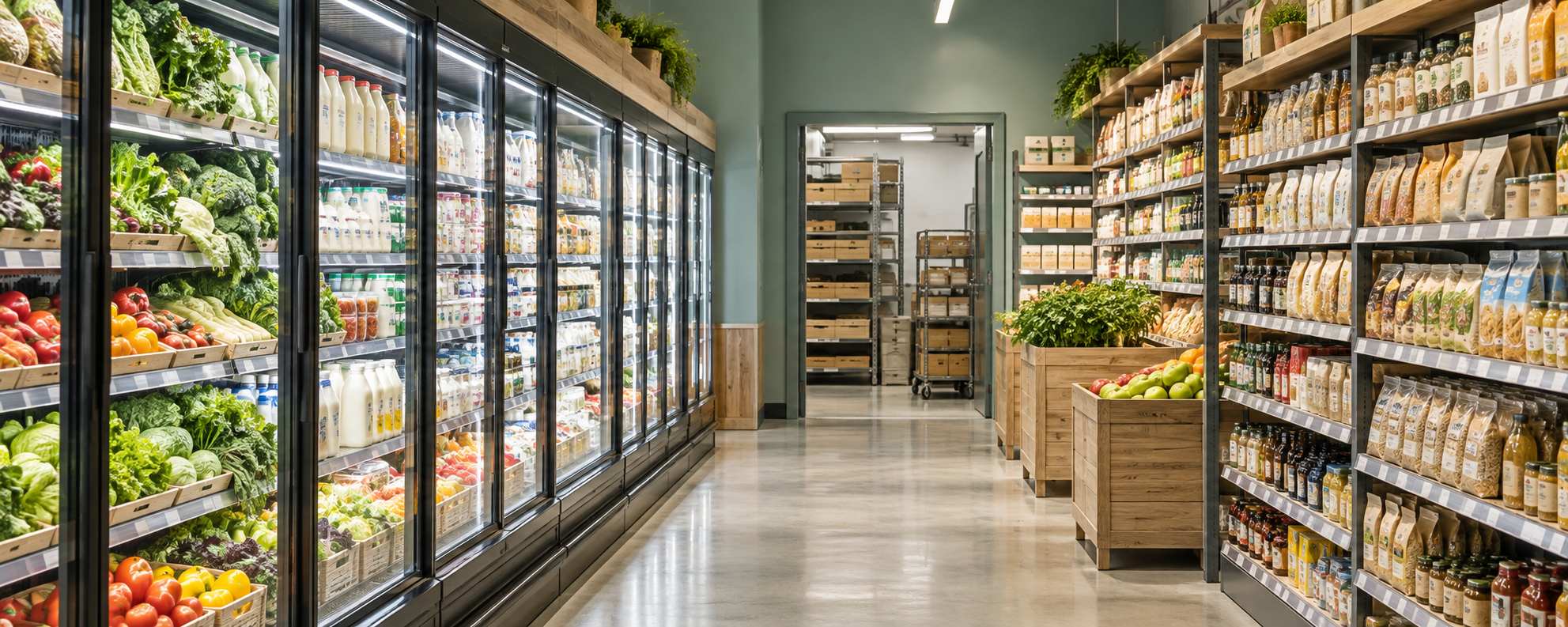
Grocery stores • Electricity behind the retail assortment
A grocery electricity review should begin with what the store sells and how it is displayed
Replacing a dry-goods aisle with chilled foods is more than a merchandising decision. It can change the equipment operating on the sales floor, the stock held behind it and the information a buyer needs when discussing electricity. For a grocery owner, the useful description is the actual assortment and refrigeration arrangement, not a generic consumption allowance per store.
Start with a marked-up store plan. Identify chilled and frozen displays, ambient shelving, stockrooms, receiving space and any concessions. Note which equipment belongs to the retailer and which is operated by another party. This gives the facilities and buying teams a common picture of the shop they are reviewing, while leaving technical assessment to the people qualified to perform it.
Describe the grocery store that the account actually serves
Bring the store’s equipment arrangement and confirmed merchandising changes to the rates page before continuing to a business inquiry.
Check Commercial Energy RatesThe case on the sales floor may be only part of the refrigeration system
EPA distinguishes stand-alone retail refrigeration, remote condensing units and supermarket systems. In a stand-alone cabinet, the refrigeration components are integrated. Other arrangements connect sales-floor cases to equipment elsewhere, including compressor racks or secondary-fluid systems. Those distinctions explain why simply counting visible cabinets can miss important parts of a store’s installation. EPA: retail food refrigeration equipment categories.
Ask the refrigeration contractor to identify the arrangement actually installed. Which displays share remote equipment? Which cabinets have their own electrical connection? Which backroom cold stores depend on the same plant? Record the answer in the store’s asset information rather than infer it from the cabinet’s appearance.
For example, a proposal to replace one display might affect a self-contained appliance, or it might involve a larger connected installation. The purchasing team should know which case applies before treating the replacement as an isolated change in usage. This guide does not determine system compatibility, refrigerant selection or the adequacy of the electrical service.
Separate the display decision from the stockholding decision
A chilled display has a customer-facing purpose; a backroom cooler supports stockholding. Both may serve the same product range, but they answer different retail needs. When an assortment changes, ask whether the proposal alters display space, storage space or both. Moving more chilled merchandise onto the floor does not tell a supplier whether the backroom installation also changes.
Consider a hypothetical store adding a frozen range. The brief should identify the proposed display equipment, any additional storage and whether existing equipment is being removed. If those details are unresolved, label the proposal as provisional. Do not represent shelf length or expected sales growth as a measured electricity increase.
Include vendor-operated cabinets and concessions in the discussion. Establish the electrical connection, bill responsibility and who decides on additions or removal. Equipment ownership and electricity purchasing authority may differ. A store should not omit a connected load because someone else owns the cabinet, or assume it can contract for an account held by another business.

Lighting needs its own store inventory
ENERGY STAR’s grocery resources address refrigeration, lighting and heating or cooling as distinct areas for energy management. The lighting discussion includes fixtures and controls, rather than treating every illuminated area as one identical load. Use that distinction when assembling the store’s information. EPA: grocery-store energy resources.
Separate general aisle lighting, lighting within displays, service-counter illumination and exterior signs. Record what is installed and which controls actually operate it. A lighting refurbishment may cover only part of the shop; the description should say so. Replacing fixtures on an ambient aisle is not evidence that display-case lighting or the loading area has changed.
Merchandising requirements also matter. Product presentation, safe access and staff tasks should be part of a professionally assessed lighting project. A proposed reduction in installed watts is an equipment assumption, not a guaranteed fall in the total utility bill. Keep any expected equipment benefit distinct from a supplier’s commercial pricing.
Receiving, replenishment and online orders can extend the store’s footprint
The public sales floor may not describe every space supporting grocery retail. Identify the receiving bay, stockholding areas, staff facilities and any area used for picking or holding online orders. If these operate under a separate meter or a landlord-controlled arrangement, keep that distinction visible.
A proposed click-and-collect service is a useful example. Determine whether orders will wait in existing storage, in new dedicated equipment or in another separately billed space. Explain the confirmed arrangement instead of assigning an electricity uplift merely because the sales channel is new. If a larger property provides some common services, obtain the relevant billing explanation before treating the retailer’s bill as the cost of the whole site.
For delivery changes, document what changes physically: storage capacity, transfer arrangements, equipment or occupied space. Do not turn this purchasing exercise into an instruction to compromise product temperatures, food handling or required operating controls. Those requirements remain with the responsible food-safety and technical teams.
A remodel needs a dated assortment-and-equipment record
Use the refrigeration arrangement and lighting inventory to define the remodel’s scope. A department change can involve the visible cases, the equipment supporting those cases and the surrounding sales area. Ask the responsible contractors to describe those relationships in the project record. That gives the commercial reviewer a concrete account of the planned installation and identifies which assumptions still need technical confirmation.
Maintain a short change record for the commercial review: which departments are affected, which equipment remains, which is replaced and what is newly added. Distinguish construction activity from the completed shop. Keep the date and status of the assumptions with the record, so an offer is not evaluated against an assortment plan that has already been superseded.
Past bills are still useful, but their meaning depends on the store that produced them. A year with a different chilled range, a closed concession or a partially completed remodel should be described honestly. Ask the supplier how material usage changes are handled in the written product rather than assume the old store and new store are interchangeable.

What the retailer should resolve with the supplier
Ask what the offer assumes about the existing store and the proposed remodel. Which charges are included in the quoted figure, and which remain elsewhere on the bill? What happens if a department opening is delayed, equipment is removed or usage differs from the stated assumptions? Obtain the answers in the actual agreement rather than rely on a general grocery-industry example.
A refrigeration service incident and an electricity outage also require different responses. Keep the contractor’s service arrangements, food-protection procedures and distribution utility’s outage process accessible to the appropriate staff. An electricity-supply contract does not replace those operational arrangements or promise uninterrupted refrigeration.
Eligibility remains specific to the account and jurisdiction. A grocery category, a chain’s contract in another state or the presence of a neighboring store does not establish retail choice. Confirm the utility territory and current program; municipal and cooperative arrangements can differ, while capped or restricted programs require additional checks.
Take the confirmed store plan into a commercial inquiry
Use Commercial Energy Rates when the account, installed arrangement and planned changes are clear. Review any later enrollment agreement separately before accepting it.
Check Commercial Energy RatesFor account context, use the city and town directory. Compare other operating types in the industry library. Where a grocery includes a distinct prepared-food operation, the restaurant guide addresses different foodservice questions; it should not replace the retail refrigeration review.
Primary references reviewed October 29, 2026. Equipment examples are conditional. No standard store consumption, product endorsement, supplier availability or saving is asserted. Images are illustrative. Technical, food-safety and installation decisions require the relevant qualified assessment.