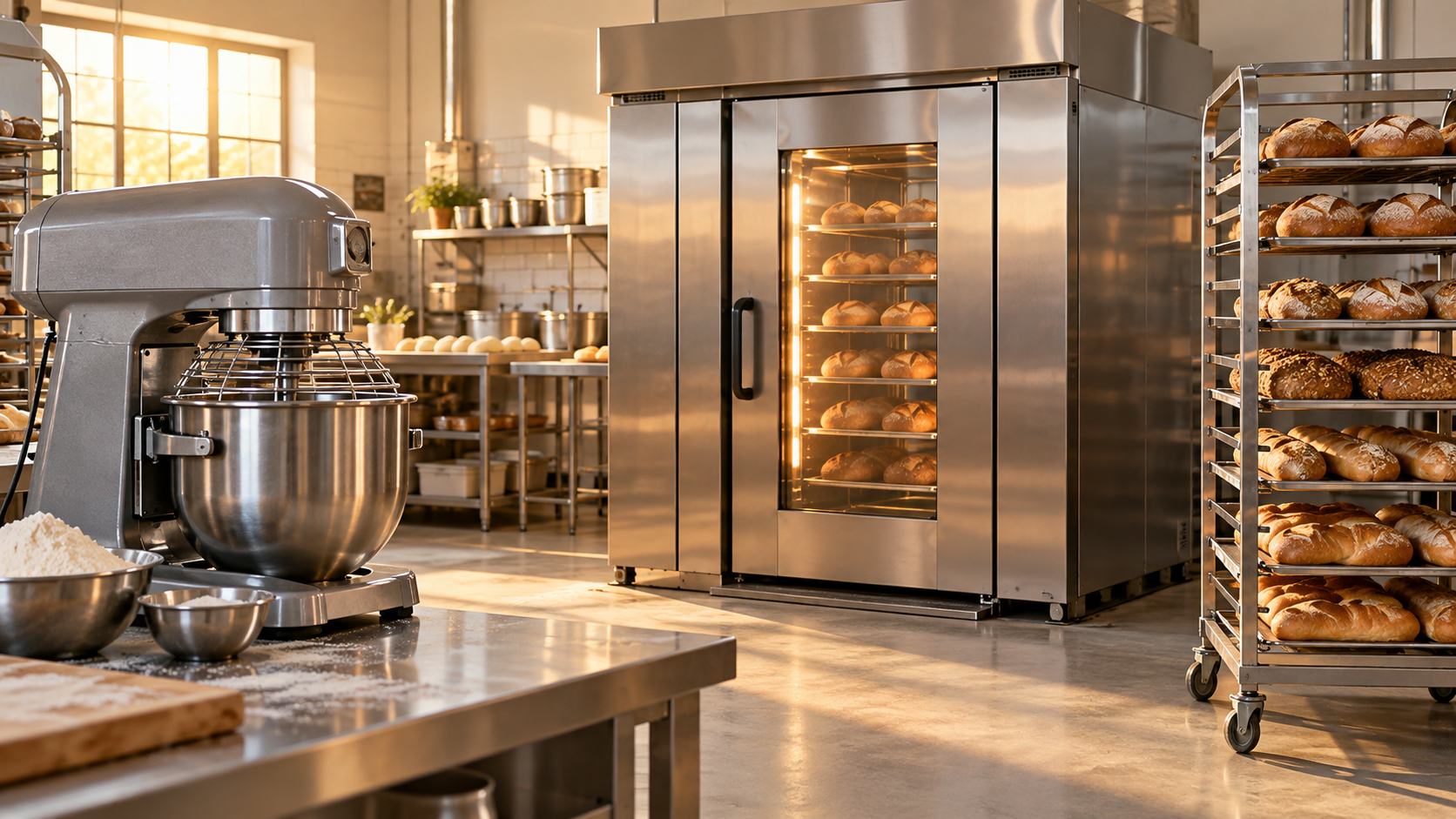
Bakeries • Electricity behind the production schedule
Build an electricity review around the bake, not the shop’s opening hours
A bakery’s trading day and its electrical working day are often different things. Dough may be chilled before the first employee arrives, an oven may be preheating while the front door is locked, and refrigerated ingredients may remain protected after the last sale. The useful purchasing question is therefore not simply “How many hours are we open?” It is “Which systems are running during each stage of our production cycle?”
This guide is for retail bakeries, wholesale bakehouses and bakery departments that want a supply discussion grounded in their own equipment. It separates electricity from other fuels, explains why the order of operations matters, and identifies the production changes a supplier should understand. It does not assign every bakery the same consumption figure or promise a saving from a particular contract.
Put your bakery’s operating pattern into the inquiry
Prepare the utility account and production information on the rates page before moving to the business form.
Check Commercial Energy RatesSeparate the oven’s fuel from its electrical connections
Begin with an equipment register that distinguishes electric heating from gas or other fuel inputs. “We have a large oven” is not enough information to characterize an electricity account. Note the actual model and fuel configuration, then identify electrically powered auxiliaries from the manufacturer’s documentation. Do the same for mixers, refrigerated storage, packaging equipment and any on-site proofing or retarding system.
The Department of Energy’s food-manufacturing overview distinguishes baking and process heating from refrigeration and freezing. For a bakery owner, the implication is straightforward: a fuel bill and an electric bill describe different parts of the operation. An electricity quote should not be evaluated as though it controls every energy cost in the bakehouse. DOE food and beverage manufacturing context.
Preheat, production and idle time are different
ENERGY STAR commercial-oven criteria consider cooking efficiency and idle energy performance. DOE’s commercial-oven purchasing guidance also distinguishes preheat, active and idle energy in its evaluation assumptions. Those categories are useful prompts for examining your own schedule; their example test conditions are not a forecast of your bakery’s bill. Record when an oven is brought to temperature, when it is loaded, and how long it remains ready between batches. ENERGY STAR commercial ovens · DOE oven evaluation guidance.
Follow one batch through the electrical day
| Production stage | What to establish at your bakery | Why it belongs in the account discussion |
|---|---|---|
| Overnight holding | Which chilled stores, freezers or dough-retarding equipment continue operating, and whether the utility meter also serves unrelated tenants. | The overnight load cannot be inferred from customer-facing hours. |
| Mixing and preparation | How mixers and other preparation equipment are scheduled relative to oven startup and the first dispatch. | A production timetable explains the overlap hidden inside a monthly total. |
| Proofing and baking | Whether proofing is separate or integrated with retarding, which ovens are electric, and whether several lines run together. | Different equipment arrangements can produce different electricity patterns even for similar products. |
| Cooling, finishing and packing | Which cooling, finishing, wrapping or storage systems are actually installed and when the last production run clears them. | The end of baking may not mark the end of the operating day. |
| Cleaning and closing | What remains energized during sanitation and which temperature-controlled systems stay on afterward. | Closing procedures help distinguish necessary continuing consumption from an assumed shutdown. |
As an equipment example, Baxter describes retarder/proofer controls that schedule temperature and humidity settings and a connection to refrigeration. That illustrates why the label “proofer” alone can conceal a more complex operating cycle. Consult the documentation for the equipment actually fitted in your bakery; the example is not a product recommendation or a claim that all cabinets use the same arrangement. Manufacturer description of a retarder/proofer system.

Keep production comparisons meaningful when the product mix changes
Comparing two months by total kilowatt-hours can hide a change in what was made. A period dominated by bread production may not resemble one with a different mix of chilled products, decorated goods or bought-in products finished on site. Record production volumes using categories that make sense for the operation. Do not divide all electricity by one output measure unless the team understands what that measure leaves out.
For wholesale work, distinguish regular contracted orders from one-off runs and identify when dispatch deadlines require a different shift pattern. For a retail bakery, explain whether a new café service, additional refrigeration or longer weekend trading is actually planned. These are examples of information to disclose, not assertions that any particular change will increase or reduce the bill by a set amount.
ENERGY STAR’s baking-industry guide provides a sector-specific starting point for an efficiency review. Use it with the facilities team to identify the relevant systems and investigate the operation’s own opportunities. Keep the resulting consumption changes separate from the effect of a supply price: a different rate and a different amount of electricity purchased are two different explanations for a changing bill. Baking-industry energy guide.
Describe expansions before asking for an agreement
If the bakery is adding an electric oven, a second production line or a separate cold room, give the project its own dated note. Include the expected installation stage, the proposed operating schedule and what remains uncertain. Ask the utility and qualified installation professionals about the physical service requirements independently of the supply negotiation. A supplier agreement cannot establish that a new machine can be connected to the existing premises.
Also identify whether the change is a replacement or an addition. Removing an old appliance and commissioning a new one is a different forecast from keeping both in use. Where the project date is not firm, ask how the proposed contract deals with changes in expected usage rather than quietly presenting a finalized forecast.

Bakery purchasing questions that deserve written answers
Will the quoted arrangement fit our seasonal production runs?
Show the supplier the actual pattern, including reduced operation, holiday orders or shutdowns where they occur. Ask whether the proposed price assumes a particular usage volume or profile and what happens when those assumptions change. Do not confuse a fixed unit price with an assurance that every other bill component or volume provision is fixed.
Can we judge the entire oven upgrade from the electricity invoice?
Not if the installation changes more than the electric load. Reconcile the equipment’s actual fuel inputs and operating records with the relevant bills. If product output, staffing hours or other machines changed at the same time, record those changes before attributing the result to one oven or one supply decision.
Should the shop and wholesale unit be submitted as one account?
Use the metering and billing arrangement, not the shared trading name, to answer that question. Prepare an account record for each separately billed premises. If production sits behind a landlord’s main meter, resolve who controls purchasing and which costs are allocated through the occupancy agreement.
What belongs in the first inquiry?
Bring the current distribution bill, the existing supply end date, the equipment-and-fuel register, the normal bake schedule and a short description of planned changes. Current supplier choice still depends on the utility territory, jurisdiction and account. Use the city and town directory for the location context, then continue through the rates page with the bakery-specific information.
Review supply with the bake schedule in hand
Connect your account details with the way the bakery will actually operate.
Prepare a Bakery Energy InquiryEquipment examples illustrate operating questions and are not endorsements. Sources reviewed October 29, 2026; no universal usage figure, customer relationship or saving is asserted. The featured and inline images are electricity illustrations rather than photographs of a named bakery.