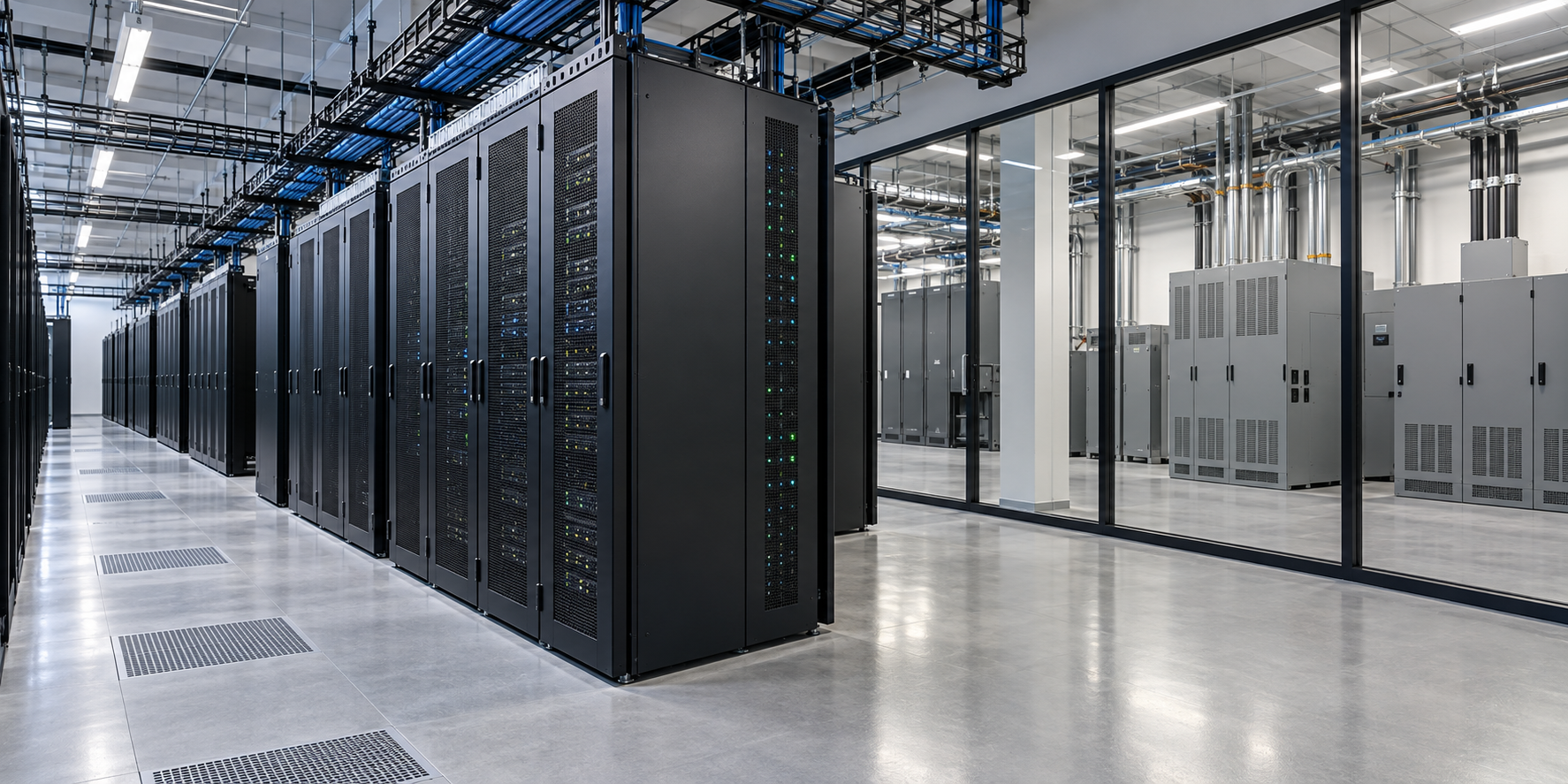
Data centers • Rack deployment, metering and commercial electricity
Give electricity purchasing a dated deployment forecast
A data-center electricity proposal needs a clear account of the computing load that will actually arrive. A powered shell, an initial rack deployment and a fully populated facility represent different stages of the same project. Identify the stage being priced, the equipment expected to operate during the agreement and the assumptions that remain provisional.
Bring the IT deployment owner, facilities team and authorized energy buyer into that discussion. IT can describe the planned workload and hardware rollout; facilities can identify the power chain and supporting systems; purchasing can reconcile those records with the proposed product. Keeping a date and an owner against each assumption makes later project changes easier to evaluate.
Prepare the data-center account and deployment brief
Use the rates page to organize the electricity account and the load information behind your business inquiry.
Check Commercial Energy RatesKeep these power and energy records distinguishable
Ask the responsible team to identify what each figure measures. The terminology in a hosting agreement, an equipment schedule and a utility bill may describe different boundaries.
| Record to identify | Question for the responsible team | Use in the commercial brief |
|---|---|---|
| Installed equipment ratings | Which hardware and infrastructure are included, and what do the documented ratings mean? | Describe the installed or planned equipment without presenting a rating as measured consumption. |
| Contracted rack or space power allowance | What capacity or service entitlement does the actual hosting agreement provide? | Keep a contractual allowance identifiable alongside the equipment expected to draw power. |
| Measured IT load | Where is the measurement taken, which equipment is included and over what interval? | Give the supplier an interpretable record rather than an unexplained rack total. |
| Facility utility-meter demand | Which electrical account covers the facility and its supporting systems? | Connect procurement to the meter and billing arrangement the authorized buyer can act on. |
| Energy recorded through the billing period | Does the history include commissioning, normal operation, outages or exceptional work? | Explain the operating circumstances behind the billed energy and any expected changes. |
Power and energy also have different units and purposes. A kilowatt figure describes power at the stated point or over the specified measurement interval; kilowatt-hours record energy over time. Keep both the units and measurement basis in the brief. The interpretation of a billed demand charge depends on the actual utility tariff, so ask for the applicable rate schedule rather than infer it from an equipment specification.
Translate the rollout into phases that the supplier can understand
Set out the expected initial population, subsequent deployments and the intended steady operating arrangement. Mark which dates are approved and which depend on customers, hardware delivery or other project milestones. A forecast should identify those dependencies so the commercial reviewer can see where the proposed volume and load shape may change.
For a hardware refresh, record retirements as well as additions. For a migration, distinguish workloads being moved from an existing site from genuinely additional activity. For a new room, explain whether existing central infrastructure will support it or a separate installation is planned. These descriptions help the engineering and commercial teams use the same project scope without requiring an unverified consumption estimate.
DOE’s data-center design guide explicitly considers initial and future loading, including low- and part-load operation, when discussing cooling and electrical systems. That supports making the deployment stage visible in the design and purchasing records. It does not supply a universal conversion from a rack count to the electricity a particular site will buy. DOE’s July 2024 data-center design guide, electrical-systems section.

Include the electrical infrastructure between the meter and IT equipment
ENERGY STAR describes power distribution units as delivering conditioned power from uninterruptible power supply systems to servers, network equipment and other electronics. Its guidance on both PDUs and UPS systems addresses energy losses in that infrastructure. The IT reading and the utility-meter reading can therefore describe different parts of the electrical chain. EPA power-distribution guidance · EPA UPS resource.
Ask facilities staff to document the installed topology, the measured loads and the equipment expected to remain in service during each deployment phase. Keep operating and design decisions with the responsible technical team. Procurement needs an accurate description of the arrangement and any confirmed changes, rather than instructions to alter redundancy or protective operating modes.
Use a PUE figure with its measurement boundary
EPA defines power usage effectiveness as total facility energy divided by energy delivered to IT equipment. Record the period and metering basis whenever a PUE figure is used. It can help describe infrastructure efficiency, but it is not a quoted electricity rate. A supplier comparison still needs the account’s actual purchasing and billing information. EPA explanation of PUE.
Match the purchasing role to the operating model
A company operating its own metered facility can prepare a utility-account brief with its authorized representative. A customer renting space in another operator’s data center should first read the hosting agreement and establish who holds the electrical account. A purchaser of managed IT or cloud services should identify how energy-related costs enter that service agreement and who controls the underlying electricity purchase.
Those are distinct commercial questions even when the same workload could move between the arrangements. A rack allocation, an infrastructure service and a direct utility account carry different contractual responsibilities. Obtain the actual account or agreement boundary before requesting an electricity enrollment for an entity that may only be purchasing a hosting service.
Keep availability commitments and supply terms in their proper agreements
Record the service-level and resilience requirements with the teams responsible for the facility and the IT service. Identify separately the distribution utility’s role, the site’s internal systems and the supplier’s commercial product. An electricity price comparison should make clear which responsibility is under discussion; a change of energy supplier does not establish a different physical redundancy arrangement.
Where a project depends on a new or expanded electrical connection, obtain the utility’s project-specific service information and the facilities plan. Use the resulting milestones in the procurement forecast. A proposed supply start date should be assessed alongside those milestones and the agreement’s written conditions.

Questions for the commercial proposal review
Which load history and forecast has the supplier used?
Ask the reviewer to identify the relevant meters, measured period and expected deployment phases. If customer commitments or hardware dates change, establish which assumptions need to be revisited and how the written product handles a material change.
Which costs are included, and how are other charges treated?
Request a written description of the supply components, any pass-through costs and continuing utility delivery charges. Keep hosting fees and internal infrastructure costs identifiable where they apply. This gives decision-makers a clear account of the part of the budget the proposed agreement addresses.
Does the site’s size settle supplier-choice eligibility?
Confirm the actual utility territory, jurisdiction and account rules. A large computing load does not by itself establish permission to enter any particular supply program. Use the location guides to identify the relevant review, then confirm current utility and supplier requirements for the premises.
Take the metered account and deployment forecast forward
Use Commercial Energy Rates for a focused business inquiry once the responsible parties and load assumptions are clear.
Prepare a Data-Center Energy InquiryContinue with the industry library for other operating types or the business electricity questions for general contract terminology.
Primary resources reviewed October 29, 2026. Equipment and operating examples require the actual facility records; they do not establish universal consumption, physical capacity, service availability or a savings outcome. Images illustrate electricity topics rather than a named data-center customer.